
Carpenter Ants in North Carolina: How to Spot Them and What to Do
Quick Answer
Carpenter ants are large, wood-nesting ants that tunnel through wood to build their colonies rather than eat it for food. They typically target wood that has been softened by moisture — around leaky windows, roof edges, decks, or crawl spaces — and over time their tunneling can weaken structural wood if it goes unaddressed. Spotting them early, along with the sawdust-like debris and smooth galleries they leave behind, is the best way to keep a small nest from turning into a larger structural problem.
Signs You Have Carpenter Ants
Piles of Sawdust-Like Material (Frass)
As carpenter ants excavate galleries inside wood, they push the debris out through small openings to keep their tunnels clear. This debris, known as frass, is typically a fine mixture of wood shavings and fragments of dead ants or insect parts, and it often collects in small mounds beneath the wood being tunneled — near baseboards, window sills, or inside wall voids. Unlike termite droppings, which look like tiny uniform pellets, carpenter ant frass tends to look coarser and more varied, since it's excavated material rather than digested waste.
Large Black or Reddish-Black Ants
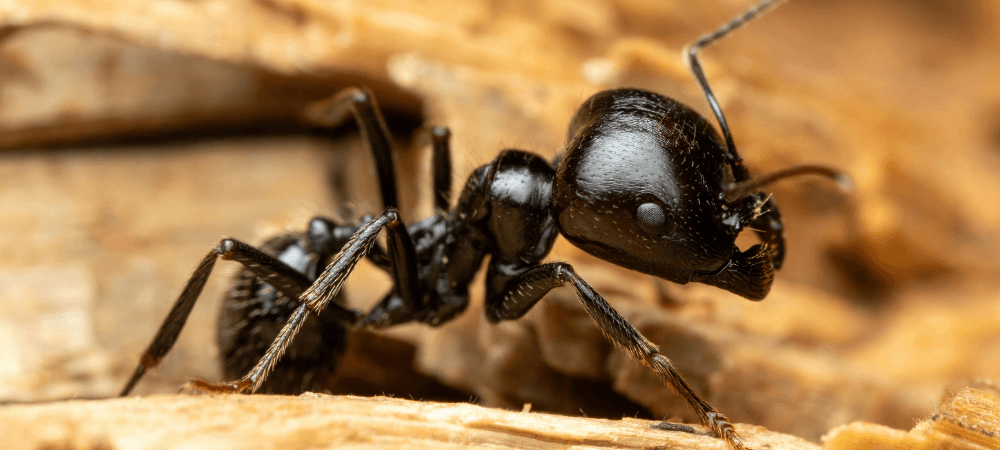
Carpenter ant workers are among the largest ants commonly found in and around homes, generally ranging from about a quarter-inch to over half an inch long depending on their role in the colony. Most species seen in North Carolina are solid black or a combination of black and reddish-brown. Seeing unusually large ants indoors, especially repeatedly in the same area, is often the first clue homeowners notice before they find any actual nest or damage.
Rustling or Faint Tapping Sounds in Walls
Because carpenter ants are most active at night, homeowners sometimes hear faint rustling, crackling, or tapping sounds coming from inside walls, ceilings, or wood framing after dark. This noise is generally the sound of workers moving through and enlarging their galleries. It's a subtle sign, easy to dismiss as a house settling, but it's worth paying attention to if it's localized to one area over several nights.
Smooth, Clean Galleries Inside Wood
If you ever expose a section of damaged wood, carpenter ant tunnels look distinctly different from termite damage. Because carpenter ants excavate wood rather than digest it, the galleries they leave behind tend to be smooth-walled and clean, almost as if sanded, and they generally follow the softer spring-growth grain of the wood. There's no mud or soil packed inside, since carpenter ants don't build their tunnels the way subterranean termites do.
Winged Ants (Swarmers) Indoors
Mature carpenter ant colonies typically produce winged reproductive ants, often called swarmers, which emerge in warmer months to start new colonies. Finding winged ants indoors, particularly near windows or light fixtures, can indicate an established nest somewhere in or near the structure rather than just foraging workers passing through. Discarded wings left behind on sills or in spider webs are another related clue.
Worker Ant Trails Near Moisture Sources
Carpenter ants forage for food outside the nest, often traveling along consistent trails at night in search of sugary or protein-based food sources. Spotting a steady trail of large black ants moving along a foundation, deck, or utility line — especially one that leads toward a damp or shaded area — is a common early sign that a colony has settled nearby, even if the nest itself hasn't been located yet.
Why Carpenter Ants Target North Carolina Homes
- North Carolina's humid, mild climate keeps moisture levels in exterior wood elevated for much of the year, and carpenter ants are strongly drawn to wood that's already soft or slightly decayed from water exposure.
- Homes with wood siding, decks, porches, and mature tree cover — common throughout the state — provide both nesting material and shaded, moisture-retentive conditions carpenter ants favor.
- Roof leaks, clogged gutters, and poor grading around foundations are frequent contributors to hidden moisture pockets in wall voids and eaves, which can go unnoticed until a colony has already settled in.
- Firewood stacked against the house, tree stumps, and landscaping mulch piled directly against siding are all common conditions in North Carolina yards that give colonies an easy bridge from the outdoors into a structure.
- Because the state's warmer months support extended ant activity, colonies generally have a longer active season to forage and expand compared to regions with harsher winters.
Noticing sawdust piles or large black ants around your home?
Get a Free QuoteCarpenter Ants vs. Termites
| Characteristic | Carpenter Ants | Termites |
|---|---|---|
| Relationship to Wood | Excavate wood to build nesting galleries but do not eat it | Consume wood and cellulose material as their food source |
| Evidence Left Behind | Piles of frass (wood shavings mixed with insect debris) near exit holes | Mud tubes on foundations and wood-colored fecal pellets or hollowed wood |
| Tunnel Appearance | Smooth, sanded-looking galleries following the wood grain | Rougher, mud-lined tunnels or channels packed with soil |
| Body Shape | Pinched, segmented waist; bent (elbowed) antennae | Straight, thick waist with no pinch; straight antennae |
How to Prevent Carpenter Ants in North Carolina
Control Moisture Around the Home
Since carpenter ants are drawn to wood that's already softened by water, reducing excess moisture around your home's structure removes much of what makes it attractive in the first place.
- Clean gutters and downspouts regularly so water drains away from the foundation
- Repair roof leaks and damaged flashing promptly
- Fix plumbing leaks under sinks, in crawl spaces, and around exterior spigots
Eliminate Wood-to-Ground Contact
Wood that touches soil directly stays damp longer and gives ants an easy, hidden entry point into a structure.
- Store firewood off the ground and away from exterior walls
- Remove old stumps, dead trees, and rotting landscape timbers near the home
- Keep mulch and dense plantings pulled back a few inches from the foundation and siding
Seal Potential Entry Points
Carpenter ants often enter through small gaps before ever establishing a nest indoors, so closing off obvious access points limits their opportunities.
- Caulk cracks and gaps around windows, doors, and utility penetrations
- Trim tree limbs and shrubs that touch or overhang the roofline
- Repair or replace weather stripping and damaged screens
Monitor Vulnerable Areas Regularly
Because early-stage colonies can be hard to spot, periodically checking the areas carpenter ants favor most helps catch problems before they grow.
- Inspect decks, porches, and window sills for frass or soft wood
- Check crawl spaces and attics for signs of moisture or ant activity
- Watch for worker ant trails at dusk or after dark near the exterior
DIY vs. Professional Carpenter Ant Treatment
DIY Approach
- Over-the-counter baits and sprays may kill visible worker ants
- Often fails to reach the actual nest, which can be hidden deep in a wall or structural void
- Disturbing a colony with the wrong product can cause it to split and spread ("budding")
- Provides no real assessment of underlying moisture or structural damage
Professional Treatment
- Identifies and targets the actual nest location, including satellite colonies
- Uses application methods and products suited to the specific site and structure
- Addresses contributing moisture or entry-point issues, not just visible ants
- Includes follow-up monitoring to confirm the colony has been eliminated
How Professional Carpenter Ant Treatment Works
- An inspector examines the interior and exterior of the property, looking for frass, galleries, worker trails, and moisture issues to help locate the nest or nests.
- Based on the inspection findings, a treatment plan is developed that targets the nest directly rather than just the ants seen foraging.
- Targeted baiting, dust, or liquid treatments are applied to nesting sites and key entry points, using methods designed to reach ants inside wall voids or wood structures.
- Conditions that attracted the colony in the first place, such as excess moisture or wood contact with soil, are noted and discussed as part of a longer-term prevention plan.
- Follow-up visits confirm that ant activity has stopped and allow for adjustments if any additional nests are discovered.
Frequently Asked Questions
How can I tell carpenter ants apart from other large ants?
Carpenter ants are generally larger than most common household ants, solid black or black-and-red in color, with a smoothly rounded top of the thorax and a single node between the thorax and abdomen. Their size and the presence of frass nearby are usually the clearest identifying clues for homeowners.
Are carpenter ants dangerous to people or pets?
Carpenter ants are not considered a direct health threat. They can deliver a pinching bite if handled or disturbed, which may sting briefly, but they don't carry disease the way some other pests do. The bigger concern is the structural wood damage an established colony can cause over time.
How did I end up with carpenter ants in my home?
Carpenter ants typically enter a structure while foraging for food or after being drawn to areas of moist or decaying wood, such as around leaky rooflines, damp crawl spaces, or wood touching the soil near the foundation. Firewood stacks, stumps, and overhanging tree limbs near the house are common bridges that make it easier for a colony to find its way in.
Can I get rid of carpenter ants myself?
Store-bought sprays and baits can reduce visible worker ants but rarely reach the actual nest, which is often hidden inside a wall void, under a deck, or deep within damaged wood. Without addressing the nest and the moisture conditions that attracted it, colonies often persist or resurface elsewhere in the structure.
What affects the cost of carpenter ant treatment?
Cost generally depends on factors like the size and location of the property, how many nests or satellite colonies are involved, how accessible the affected areas are, and whether any moisture or structural repairs are needed alongside treatment. A property with an established colony hidden in a wall typically requires more work than one caught at an early stage.
When should I call a professional instead of treating it myself?
If you're seeing frass, hearing sounds in your walls, finding winged ants indoors, or have already tried over-the-counter products without lasting results, it's generally time to bring in a professional. These signs usually mean the colony is established, and locating and treating the actual nest requires more than surface-level treatment.
Do carpenter ants mean my house already has water damage?
Not necessarily, but their presence is often a signal worth investigating. Carpenter ants are drawn to wood that's already somewhat softened by moisture, so finding them can be an early indicator of a leak, poor drainage, or a ventilation issue that hasn't been fully addressed yet.
What time of year are carpenter ants most active in North Carolina?
Carpenter ants are generally active throughout the warmer months and can be found foraging year-round in milder periods, but homeowners often notice increased activity, including swarms of winged ants, during spring as colonies mature and expand.
Can carpenter ants come back after treatment?
If the original moisture source or entry point isn't addressed, a property can remain attractive to new colonies even after an existing nest is eliminated. That's why ongoing monitoring and addressing contributing conditions are typically part of a complete treatment approach.
Dealing With Carpenter Ants?
Get a professional inspection to find the nest and stop the damage before it spreads.