
Carpenter Bees in North Carolina: Signs, Causes and Prevention
Quick Answer
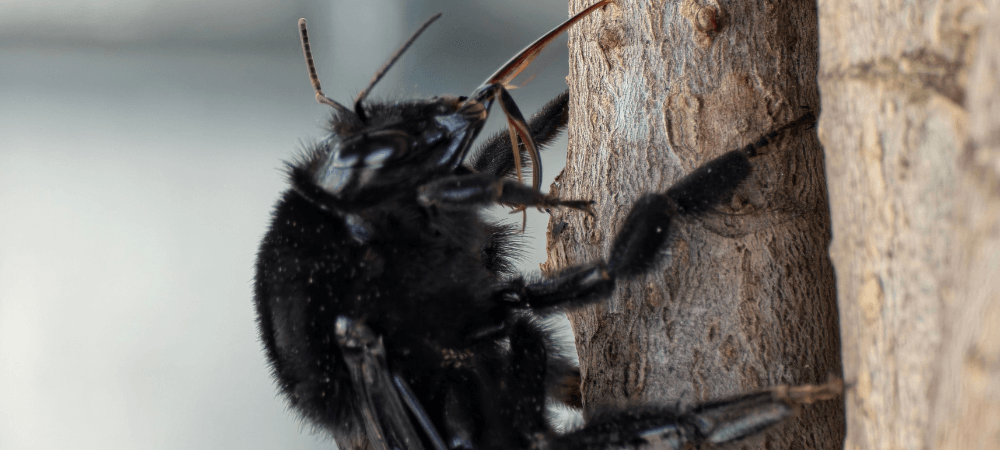
Carpenter bees are large, wood-boring bees that drill smooth, perfectly round entry holes into untreated or weathered wood on decks, eaves, fascia boards, and outdoor furniture to build nesting galleries. They look similar to bumblebees but have a shiny, hairless black abdomen instead of a fuzzy yellow-and-black one, and they generally aren't aggressive toward people. Left alone, though, their tunneling can widen year over year and lead to real structural wear on exposed wood.
Signs Of A Carpenter Bee Problem
Perfectly Round, Dime-Sized Holes
The most recognizable sign of carpenter bee activity is a nearly perfect circular hole, roughly the diameter of a pencil eraser, bored into the surface of exposed wood. Unlike the ragged holes left by other wood-damaging insects, carpenter bee entry holes are smooth and clean because the bee is excavating the tunnel herself rather than feeding on the wood.
Sawdust-Like Debris (Frass) Below The Hole
Carpenter bees don't eat the wood they remove; they push it out of the tunnel as they dig. This typically leaves a small pile of fine, sawdust-like material directly beneath the entry hole, often on a windowsill, deck board, or the ground below. Fresh frass is one of the clearest confirmations that a hole is actively being used rather than old and abandoned.
Yellowish Or Brownish Staining Near The Entrance
Streaks of yellow-to-brown staining often appear on the wood surface just below or around an active entry hole. This staining generally comes from fecal matter and pollen residue accumulating as the bee moves in and out of the tunnel, and it tends to be more noticeable during periods of heavy nesting activity in spring.
Large Bees Hovering Near Eaves And Wood Surfaces
Homeowners often notice large, robust bees hovering in place near roof eaves, deck railings, or wooden trim before they ever spot a hole. This hovering behavior, especially low patrols back and forth along a fascia board or overhang, is a strong early indicator that bees are scouting or defending a nesting site nearby.
Audible Buzzing Or Scratching Inside Wood
Because carpenter bees tunnel horizontally a short distance before turning to run with the wood grain, it's sometimes possible to hear a faint buzzing or scratching sound coming from inside an active piece of wood, particularly if you place an ear close to the surface near a hole. This is a sign the tunnel is occupied and being expanded.
Multiple Holes Clustered In The Same Area
Carpenter bees frequently reuse and expand existing tunnels year after year, and new individuals are often drawn to previously used wood. Over time, this can result in several holes clustered along the same board, beam, or trim piece, which is generally a sign of an established, ongoing infestation rather than a single isolated visit.
Why Carpenter Bees Target North Carolina Homes
North Carolina's mix of humid summers, mild winters, and abundant tree cover creates favorable conditions for carpenter bee populations to persist and expand across most of the state. Activity generally increases in spring as overwintering adults emerge to mate and establish new nesting galleries, and it can pick up again toward late summer as a new generation becomes active.
Older homes and outdoor structures are especially vulnerable because carpenter bees strongly prefer bare, weathered, or untreated softwoods such as pine, cedar, redwood, and cypress, all of which are common in decking, siding, fascia boards, and outdoor furniture throughout the region. Wood that has never been painted or sealed, or that has started to weather and soften, is far easier for a bee to excavate than wood protected by a fresh coat of paint. Structures with exposed eaves, open porches, sheds, and wooden fences typically offer the greatest amount of vulnerable surface area, which is part of why the same properties tend to see repeat activity in the same general locations each year.
Noticing round holes or sawdust piles around your home?
Contact Pest-XCarpenter Bees Vs. Bumblebees
These two bees are easy to confuse at a glance since both are large and fly with a similar heavy, hovering pattern. Looking closely at the abdomen and where the activity is happening usually settles the question quickly.
| Feature | Carpenter Bee | Bumblebee |
|---|---|---|
| Abdomen Appearance | Shiny, smooth, and mostly hairless black abdomen | Fuzzy, dense abdomen with yellow-and-black banding |
| Nesting Location | Bores round tunnels into bare or weathered wood | Nests in the ground, old rodent burrows, or existing cavities |
| Typical Sighting | Hovering near eaves, decks, and wooden trim; round holes with sawdust nearby | Foraging on flowers in gardens and open landscaping |
| Social Behavior | Solitary; each female generally excavates and provisions her own tunnel | Social; lives in a colony with a queen and workers |
How To Prevent Carpenter Bees In North Carolina
Paint Or Seal Exposed Wood Surfaces
Carpenter bees strongly favor bare or weathered wood over painted or stained surfaces. Applying and maintaining a quality exterior paint on decks, fascia boards, eaves, and outdoor furniture removes much of the appeal for a nesting female and is generally considered one of the most effective long-term deterrents.
Fill And Refinish Old Holes Promptly
Because carpenter bees often return to and expand previously used tunnels, filling old holes with wood putty or a similar filler and then repainting the area can help discourage repeat nesting in the same spot in future seasons.
Choose Hardwoods Or Treated Lumber For New Construction
When building or replacing decking, trim, or outdoor structures, hardwoods and pressure-treated lumber are generally more resistant to carpenter bee excavation than untreated softwoods like pine or cedar. This is a useful consideration for any upcoming outdoor renovation project.
Reduce Nearby Attractants Where Practical
Unfinished wood piles, old fencing, and untreated outbuildings near the home can serve as additional nesting sites that support a larger local population. Addressing or treating these secondary wood sources on the property can help reduce overall pressure on the home itself.
DIY Vs. Professional Carpenter Bee Treatment
DIY Approach
- May reduce activity around a single, easily accessible hole
- Store-bought dusts often only reach the entrance, not the full tunnel network
- Holes are frequently reused or reopened if not properly filled and sealed
- Ladder work near eaves and rooflines carries real fall risk
- Doesn't address the broader reasons the wood was attractive in the first place
Professional Treatment
- Targets active galleries directly, not just the visible entrance
- Trained technicians can safely inspect and treat elevated or hard-to-reach areas
- Includes proper hole filling and sealing to discourage reuse
- Identifies contributing conditions, like bare wood, across the whole property
- Provides an informed read on whether repeat visits or follow-up are warranted
How Professional Carpenter Bee Treatment Works
- A technician inspects the exterior of the home, identifying active and inactive holes, staining, frass, and any wood conditions that are contributing to activity.
- Active tunnels are treated to address bees within the galleries, with attention paid to reaching the full depth of the tunnel rather than just the entrance.
- Treated holes are filled and sealed to deter future reuse of the same tunnel by returning or new bees.
- The technician reviews vulnerable wood surfaces around the property and discusses prevention steps, such as painting or sealing bare wood, to reduce the likelihood of new activity.
- Follow-up recommendations are provided based on the extent of activity found, since heavily nested areas may benefit from a check-in during the next active season.
Frequently Asked Questions
How can I tell if it's a carpenter bee and not a bumblebee?
Look at the abdomen. Carpenter bees have a shiny, mostly hairless black abdomen, while bumblebees have a dense, fuzzy abdomen with yellow-and-black banding. Location is another clue: carpenter bees are typically seen near round holes bored into wood, while bumblebees are more often seen foraging on flowers or nesting in the ground.
Do carpenter bees sting?
Only female carpenter bees have a stinger, and they rarely use it unless directly handled or provoked. Male carpenter bees, which are often the ones seen hovering aggressively near people, do not have a stinger at all, even though their behavior can seem intimidating.
Why do carpenter bees seem to dive-bomb people near my home?
That hovering, darting behavior is typically a male carpenter bee patrolling and defending the area around a nesting site. It can feel alarming up close, but since males lack a stinger, this behavior is generally more of a nuisance than an actual safety concern.
How did carpenter bees end up on my property?
Carpenter bees are drawn to bare, untreated, or weathered wood surfaces, which are common on older decks, eaves, fascia boards, and outdoor furniture throughout North Carolina. A female seeking a nesting site will often select an easily excavated piece of exposed wood, and once a tunnel is established, it can attract repeat activity in following seasons.
Can I just fill the holes myself and be done with it?
Filling a hole can help discourage reuse, but if the tunnel is still active when it's sealed, bees can sometimes bore a new exit or reopen the area. It's generally more effective to address active activity first and then fill and seal the hole as part of a complete approach.
Is DIY treatment enough, or should I call a professional?
A single, easily reached hole with light activity may respond to a DIY approach, but multiple holes, elevated locations, or an ongoing pattern of activity across several seasons are usually better handled by a professional who can treat the full gallery and evaluate contributing conditions around the property.
What affects the cost of carpenter bee treatment?
Cost factors generally include the number of active holes, how accessible they are (ground level versus a second-story eave), the extent of any existing wood damage, and whether follow-up treatment or prevention work is recommended. A professional inspection is the most reliable way to understand what a specific property needs.
Can carpenter bees actually damage my home?
A single tunnel rarely causes serious harm, but carpenter bees often reuse and extend existing galleries year after year. Over time, and especially when multiple holes cluster in the same board or beam, this can weaken the wood and lead to more significant structural wear.
When should I call a professional about carpenter bees?
It's a good time to call a professional if you're seeing multiple holes, holes in hard-to-reach or elevated areas, recurring activity in the same spot each year, or any signs of softened or damaged wood around an entry point.
Dealing With Carpenter Bees Around Your Home?
Pest-X can inspect your property and recommend the right next step for your situation.