
Millipedes and Centipedes: What's the Difference and Why Are They in My House?
Quick Answer
Millipedes and centipedes are both moisture-loving arthropods — not insects — that regularly show up in North Carolina yards, mulch beds, and homes, especially after rain. Millipedes are generally slow-moving decomposers that feed on decaying plant matter and pose little direct risk, while centipedes are fast-moving predators that hunt other bugs. Despite their appearance, centipede bites to humans are uncommon and are generally considered a minor, low-risk irritation rather than a medical concern. Neither pest is typically considered structurally damaging, but large numbers indoors usually point to a moisture or entry-point issue worth addressing.
How to Identify Millipedes and Centipedes
Leg Count and Body Shape
The clearest way to tell these two apart is by looking closely at the legs and body shape. Millipedes have a rounded, cylindrical body with two pairs of legs per body segment, giving them a dense, "many-legged" look even though the popular name overstates the actual count. Centipedes, by contrast, have a flattened body with a single pair of legs per segment, and those legs are typically longer and more visible, projecting out from the sides of the body rather than tucking underneath it.
Movement Speed
Movement is often the fastest way to identify which pest you're looking at without getting too close. Millipedes tend to move slowly and deliberately, which fits their role as scavengers feeding on decaying organic material. Centipedes are generally quick, erratic movers, since speed helps them chase down the small insects and other arthropods that make up their diet.
Color and Size
Millipedes commonly appear dark brown, black, or occasionally reddish, with a smooth, segmented, worm-like appearance. Centipedes vary more in color, often appearing yellowish-brown to reddish-brown, and their body tends to look more angular and segmented in profile. Size can vary widely by species in either group, so color and shape are usually more reliable identifiers than size alone.
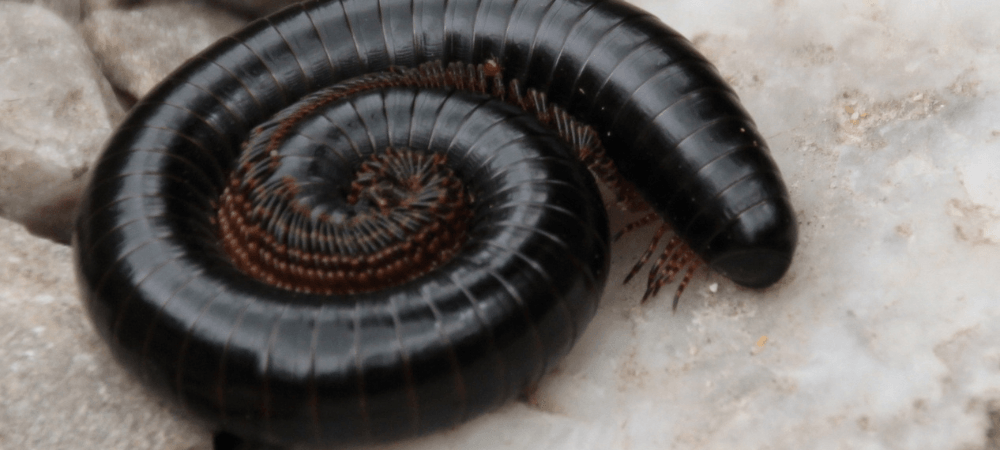
Millipede Curling Defense
When threatened, millipedes typically curl into a tight spiral or coil rather than trying to flee. This is a defensive posture that protects their softer underside and is often accompanied by the release of a mild defensive secretion from pores along their body. Centipedes generally do not exhibit this curling behavior and are more likely to try to escape quickly or, if cornered, use their front pincer-like appendages defensively.
Antennae and Sensory Features
Both pests have antennae, but centipede antennae tend to be longer and more prominent, aiding their active hunting style. Millipede antennae are typically shorter and less noticeable, consistent with their slower, less predatory lifestyle.
Why Millipedes and Centipedes Invade North Carolina Homes and Yards
Both millipedes and centipedes are drawn to moisture, and North Carolina's humid climate and seasonal heavy rainfall create favorable conditions for both. Millipedes are typically found in areas with decaying organic matter, such as thick mulch beds, leaf litter, compost piles, and rotting wood, where they feed and reproduce. Centipedes are less interested in the decaying material itself and more interested in the insects and small arthropods it attracts, since centipedes are predators tracking a food source rather than a moisture source directly.
Damp crawl spaces, poor foundation drainage, and gaps around basement walls can create indoor conditions that mimic their preferred outdoor habitat, which is often why homeowners notice more activity after extended periods of rain. During particularly wet stretches, both pests may migrate toward drier, elevated ground — which sometimes means moving toward and into a home's foundation — though the extent of this seasonal movement can vary by species and local conditions.
Seeing millipedes or centipedes around your NC home?
Get a Free QuoteMillipedes vs. Centipedes: Side-by-Side Comparison
| Trait | Millipedes | Centipedes |
|---|---|---|
| Legs per Body Segment | Two pairs | One pair |
| Diet | Decaying plant matter and organic debris | Predatory; feeds on insects and other small arthropods |
| Movement | Slow and deliberate | Fast and erratic |
| Bite or Defensive Risk | Generally does not bite; may release a mild defensive secretion when handled | Capable of a defensive bite, though this is uncommon and generally considered low risk to humans |
| Defense Behavior | Curls into a tight spiral | Flees quickly or uses front pincers if cornered |
| Typical Habitat | Mulch, leaf litter, compost, damp soil | Damp voids, under debris, basements, crawl spaces |
How to Prevent Millipedes and Centipedes in North Carolina
Manage Moisture and Drainage
Since both pests are drawn to damp conditions, addressing standing water, clogged gutters, and poor grading around the foundation can make a property less attractive to them. Improving crawl space ventilation and addressing any sources of excess indoor humidity can also help reduce the conditions that support their presence indoors.
Manage Mulch Depth and Placement
Thick mulch beds pushed up against the foundation give millipedes an easy food source and a direct path toward the home. Keeping mulch layers modest in depth and pulling them back a few inches from the foundation can reduce nearby habitat and limit how close these pests get to entry points.
Seal Entry Points
Millipedes and centipedes are often able to slip indoors through small gaps around doors, windows, foundation cracks, and utility penetrations. Sealing these openings with weatherstripping or caulk can help reduce the number of pests that find their way inside, particularly during wetter months.
Reduce Outdoor Lighting Attraction
While these pests are not typically drawn to light the way many flying insects are, bright exterior lighting can attract the smaller insects that centipedes prey on, indirectly increasing centipede activity near entry points. Adjusting fixture placement or using yellow-toned bulbs near doors may help reduce this secondary attraction.
DIY vs. Professional Treatment
DIY Approach
- Reducing mulch depth and moving it away from the foundation
- Clearing leaf litter and organic debris from around the home
- Improving gutter drainage and yard grading
- Sealing visible gaps and cracks
- May not address underlying crawl space moisture
- Limited effect on larger or recurring populations
Professional Treatment
- Identifies moisture sources contributing to activity
- Targets harborage areas in mulch, voids, and crawl spaces
- Applies treatments matched to the specific pest and site conditions
- Addresses entry points as part of a broader exclusion plan
- Provides ongoing monitoring for recurring seasonal activity
How Professional Treatment Works
- An inspection is conducted around the exterior, foundation, mulch beds, and any crawl spaces or basements to identify moisture sources and harborage areas.
- Conducive conditions, such as excess moisture, thick mulch, or debris piles, are noted and discussed as part of the overall plan.
- A targeted treatment is applied to identified harborage and entry areas, focused on reducing populations where they are active.
- Exterior entry points are addressed as needed to help limit how many pests are able to move indoors.
- Follow-up visits may be scheduled to monitor activity, particularly around seasonal rainfall patterns.
Frequently Asked Questions
Do centipedes bite people?
Centipedes are capable of a defensive bite if handled or trapped against skin, but this is uncommon in typical household encounters and is generally considered a minor, low-risk irritation rather than a medical concern. If you have specific health concerns, it's best to consult a medical professional.
Are millipede secretions harmful?
Millipedes can release a mild defensive fluid from pores along their body when threatened. This is generally considered low risk in casual contact, but it's a good habit to wash your hands after handling one and to avoid touching your eyes or face.
Why do I see more of them after it rains?
Heavy rain can saturate soil and mulch, which may push millipedes and centipedes to seek drier, elevated ground — sometimes leading them toward a home's foundation. The exact degree of this movement can vary by location and species.
Are millipedes or centipedes harmful to my garden or plants?
Millipedes primarily feed on decaying organic matter rather than living plant tissue, though they may occasionally feed on soft seedlings or overripe produce in some cases. Centipedes are predators and generally do not feed on plants at all, since their diet consists of other small arthropods.
Do millipedes and centipedes reproduce indoors?
Both generally prefer damp, organic-rich outdoor environments for reproduction rather than the interior of a home. Indoor sightings are more commonly the result of pests wandering in from nearby outdoor habitat than an established indoor population, though persistent moisture problems can change that over time.
What is a house centipede, and is it different from other centipedes?
The house centipede is a specific species known for its long legs and notably fast movement, often seen in bathrooms, basements, and other damp indoor spaces. It behaves similarly to other centipedes in that it is a predator drawn to areas with insect activity and moisture, rather than to food or structural materials.
Can millipedes or centipedes damage my home's structure?
Neither pest is generally considered a structural threat. Millipedes feed on already-decaying organic material rather than sound wood or building materials, and centipedes do not feed on structures at all since they are predators of other small pests.
How can I tell if I have a moisture problem based on these pests?
A noticeable or recurring presence of millipedes or centipedes indoors, especially in basements or crawl spaces, can be a signal worth investigating for excess moisture, poor drainage, or ventilation issues, since both pests are strongly associated with damp conditions.
Do millipedes and centipedes stay active year-round in North Carolina?
Activity levels can vary by season and local weather patterns, with many homeowners noticing more activity during warmer, wetter months. Some activity may continue at lower levels through cooler months depending on local conditions.
Dealing With Millipedes or Centipedes in North Carolina?
Pest-X can help identify what's driving the activity and put a plan in place.